First stratocaster, part 1: first steps before cutting wood
Started: November 1, 2025 • Ended: not finished yet
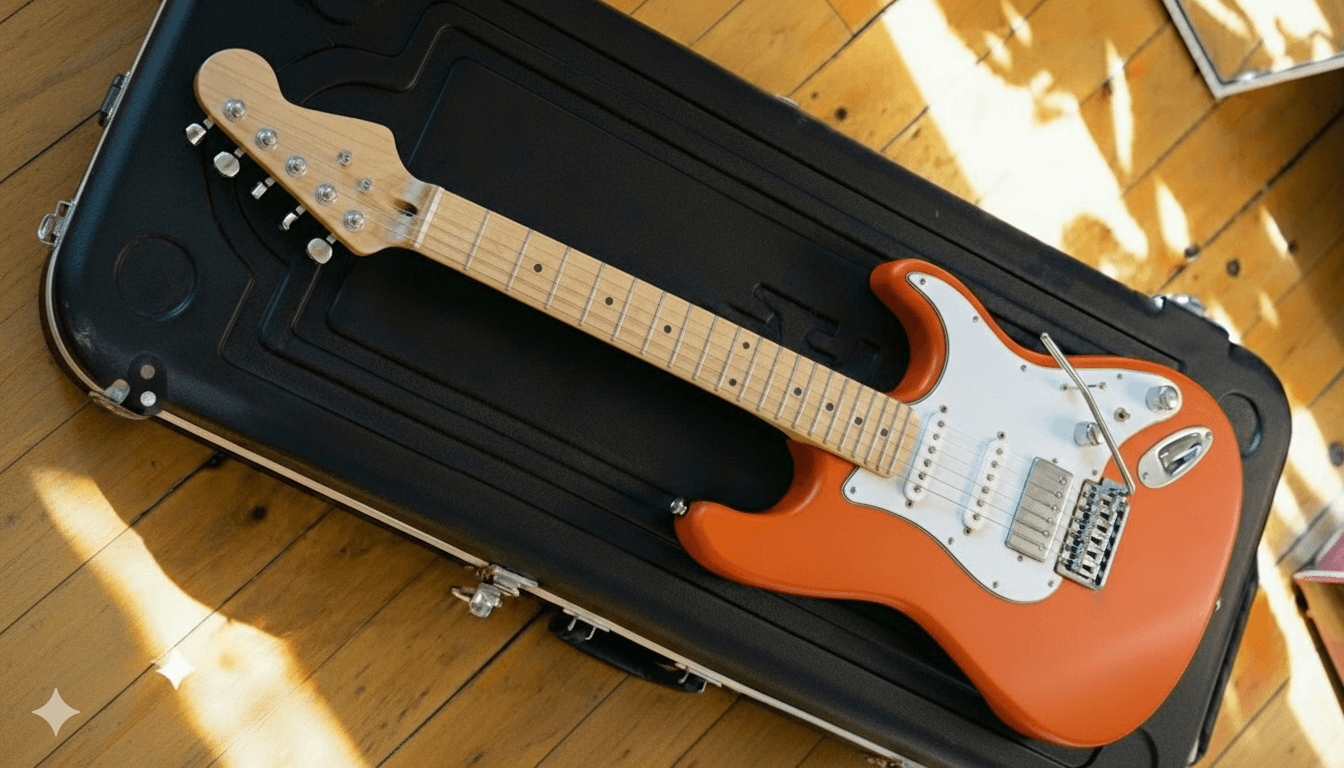
After finishing my last guitar - the Norbertocaster - I was left with a long list of conclusions and lessons learned. I knew exactly what I wanted to do better this time, and also what mistakes I didn't want to repeat. Before I even touched a piece of wood for this Strat-style build, I decided to slow down and take care of a few important things first.
First: define and visualize the vision.
This part was surprisingly painful - but also incredibly helpful - thanks to Gemini Pro. After many iterations, I finally managed to shape a clear idea of what this guitar should become. You can see the result in the first photo: an orange Strat-inspired guitar with a light, natural flame maple neck and fretboard, Vermillion Pickups (with a humbucker at the bridge), and a few deliberate deviations from the classic Stratocaster formula. This is not meant to be a traditional Strat.
Second: upgrade the tools.
To significantly improve build quality - and speed things up - I invested in a few essential tools. The most important one was a router, which completely changed the way I work: cleaner results, better repeatability, and far more control over the process. Very quickly, though, it became obvious that a router doesn’t really work on its own. To keep the workspace under control and the air breathable, I also had to add a proper shop vacuum to the setup. On top of that, a Dremel turned out to be indispensable for all the small adjustments, fine details, and those moments when a full-size tool would simply be too much.
Third: templates matter.
Once you have a router, templates become a must. This is where Daniel from Hathor Pickups stepped in and helped me cut precise plexiglass templates, allowing me to shape the guitar parts accurately and consistently.
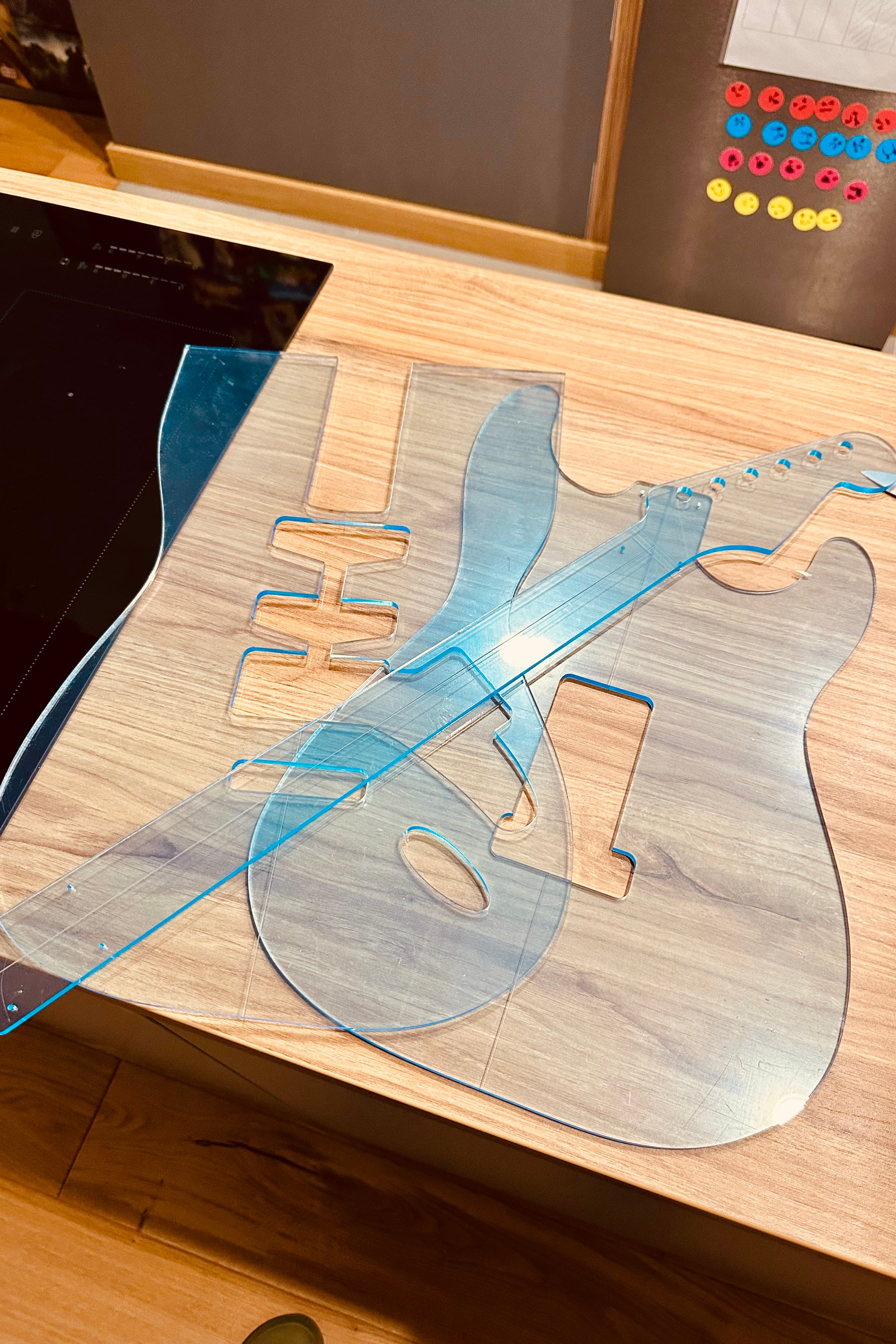
With all of that done, it was finally time to move on to the real work - cutting the body.